
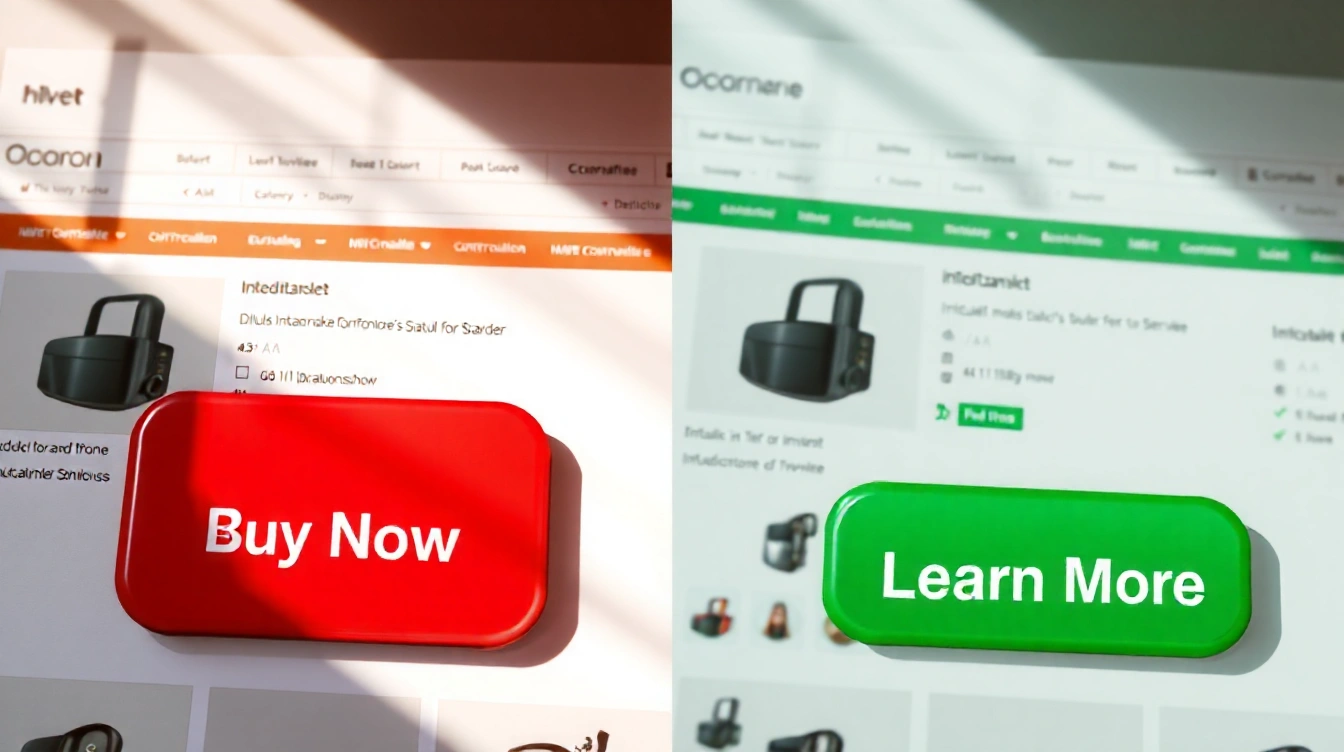
In the fast-paced world of digital marketing, A/B testing has become an essential tool for optimizing websites, emails, and campaigns. By comparing two versions of a page or message, marketers can identify what resonates best with their audience and make data-driven decisions to boost engagement. Properly implemented, A/B testing allows you to refine layouts, headlines, calls-to-action, and more, ultimately driving higher conversions and improving ROI. It’s not just about guessing what works—it’s about learning from real user behavior. So, how can you harness A/B testing to unlock your path to higher conversions and maximize your results?
Mastering the Art of A/B Testing for Data-Driven Decisions
How can a simple button color change boost conversions by 32%? The answer lies in systematic a/b testing. According to HubSpot’s 2024 Marketing Report, companies using structured experimentation see 19% faster revenue growth than those relying on intuition alone. This powerful methodology transforms guesswork into data-driven insights, enabling businesses to optimize user experiences with scientific precision and measurable results.
Additional reading : How an ai copywriter boosts your seo and content strategy
Understanding the Fundamentals of Split Testing
Split testing, commonly known as A/B testing, represents the gold standard for making data-driven decisions in digital optimization. At its core, this methodology involves presenting different versions of a webpage, feature, or element to separate user groups simultaneously, then measuring which variant produces better results for your key metrics.
The beauty of split testing lies in its scientific approach to optimization. Rather than relying on assumptions or opinions, you gather concrete evidence about what resonates with your audience. This process eliminates guesswork and provides clear insights into user behavior patterns that might otherwise remain hidden.
In parallel : Why Is Data-Driven Marketing Crucial for Your Business Success?
Modern testing approaches fall into two main categories: client-side testing and server-side testing. Client-side testing modifies elements after the page loads in the user’s browser, making it ideal for quick visual changes and front-end optimizations. Server-side testing, meanwhile, delivers different versions directly from your server, offering more robust testing capabilities for complex functionality changes and backend modifications.
Today’s versatile platforms support both methodologies seamlessly, allowing teams to choose the most appropriate approach for each specific test scenario. This flexibility ensures that whether you’re testing a simple button color change or a complete checkout flow redesign, you have the right tools at your disposal to execute meaningful experiments that drive genuine business impact.
Implementing Effective A/B Testing Strategies for Conversion Optimization
A successful A/B testing program requires a systematic approach that goes beyond random experimentation. Each test should follow a structured methodology to deliver actionable insights and measurable improvements.
- Define clear hypotheses: Start with specific, measurable predictions based on user behavior data, analytics insights, or conversion bottlenecks. Your hypothesis should clearly state what you expect to change and why.
- Select high-impact elements: Prioritize testing elements that directly influence conversion decisions – headlines, call-to-action buttons, pricing displays, form fields, or page layouts that appear in your conversion funnel.
- Configure meaningful variants: Create test variations that represent significant changes rather than minor tweaks. Each variant should test a distinct approach to solving the identified conversion barrier.
- Set up comprehensive tracking: Implement proper event tracking for both primary conversion goals and secondary metrics. Monitor micro-conversions, engagement metrics, and potential negative impacts on other pages.
- Establish testing parameters: Determine sample size requirements, test duration, and statistical significance thresholds before launching. Plan for seasonal variations and traffic fluctuations that might affect results.
Remember that effective A/B testing is an iterative process. Each experiment should inform your next hypothesis, building a knowledge base of what resonates with your specific audience.
Choosing the Right Metrics and Sample Sizes
Selecting the right metrics forms the foundation of any successful A/B test. Your primary metric should directly align with your business objectives, whether that’s conversion rate, revenue per visitor, or user engagement. Focus on one primary metric to avoid the multiple comparisons problem, which can lead to false positives and misleading results.
Sample size calculation requires careful consideration of your current conversion rate, the minimum detectable effect you want to identify, and your desired statistical power. A common mistake is running tests with insufficient sample sizes, leading to inconclusive results. Most platforms recommend achieving at least 1,000 conversions per variant to reach statistical significance, though this varies based on your baseline performance.
Test duration should balance statistical requirements with practical business needs. While you need enough time to account for weekly seasonality patterns, running tests too long can dilute results due to external factors. Statistical significance typically requires a 95% confidence level, but remember that reaching significance doesn’t automatically mean your results are practically meaningful for your business goals.
Advanced Testing Methods Beyond Basic Splits
Les tests A/B classiques représentent seulement la pointe de l’iceberg des méthodes d’expérimentation disponibles. Quand votre stratégie d’optimisation mûrit, des approches plus sophistiquées comme le test multivarié ouvrent de nouvelles perspectives d’amélioration.
Le test multivarié permet d’évaluer simultanément plusieurs variables sur une même page. Cette méthode révèle les interactions complexes entre différents éléments, là où les tests A/B traditionnels ne testent qu’une variable à la fois. Par exemple, vous pouvez tester conjointement le titre, l’image et le bouton d’appel à l’action pour découvrir quelle combinaison génère les meilleures conversions.
Les tests factoriels complets et fractionnaires offrent également des insights précieux lorsque vous souhaitez optimiser plusieurs éléments interconnectés. Ces approches permettent d’identifier les effets de synergie entre variables, souvent impossibles à détecter avec des tests séquentiels.
L’expérimentation avancée inclut également les tests de personnalisation dynamique et les algorithmes d’optimisation automatique. Ces méthodes adaptent l’expérience utilisateur en temps réel, maximisant les performances sans intervention manuelle constante.
Building a Culture of Experimentation in Your Organization
Creating a sustainable culture of experimentation requires more than just implementing testing tools. It demands a fundamental shift in mindset where data-driven decisions become the norm rather than the exception. Organizations that successfully embrace this transformation see teams naturally gravitate toward hypothesis-driven thinking and evidence-based improvements.
The foundation lies in establishing clear processes that make experimentation accessible to all stakeholders. This means developing standardized workflows for test creation, result interpretation, and knowledge sharing. When teams understand the “why” behind testing methodologies, they become advocates rather than passive participants in the optimization journey.
Leadership support proves crucial in sustaining this cultural shift. Teams need dedicated time for experimentation, appropriate training resources, and permission to learn from failed tests. A test-and-learn mentality flourishes when organizations celebrate insights gained from unsuccessful experiments as much as they celebrate winning variations.
Regular training sessions and knowledge-sharing workshops help teams develop confidence in their testing abilities. By creating internal champions who can guide colleagues through the experimentation process, organizations build sustainable capability that extends beyond individual projects and becomes embedded in their operational DNA.
Common Questions About Split Testing
What is A/B testing and how does it work for websites
A/B testing compares two versions of a webpage by showing each version to different visitors simultaneously. You measure which version performs better based on key metrics like conversions, clicks, or engagement rates.
How long should I run an A/B test to get reliable results
Run tests for at least one business cycle (typically 1-2 weeks) to account for weekly patterns. Continue until you reach statistical significance with sufficient sample size, usually requiring 1,000+ conversions per variation.
What’s the difference between A/B testing and multivariate testing
A/B testing compares complete page versions, while multivariate testing examines multiple elements simultaneously. Multivariate requires significantly more traffic but reveals how different elements interact with each other on performance.
How do I choose the right metrics to measure in my A/B tests
Focus on metrics directly tied to your business goals. Primary metrics should be conversion-related (sales, signups, downloads), while secondary metrics track user behavior like bounce rate or time on page.
What sample size do I need for statistically significant A/B test results
Sample size depends on your current conversion rate and desired effect size. Generally, aim for at least 1,000 conversions per variation. Use statistical calculators to determine precise requirements before starting.